Open-plan ceiling grids and desk lights rarely make a shared dining table feel intentional. By the end, readers will know how dedicated fixtures improve zoning, comfort and food presentation, and how to specify them for Delhi offices, lounges and commercial interiors without creating glare or maintenance problems.
Key takeaways
- Use focused table lighting instead of relying on uniform office ceiling grids.
- Choose comfortable light levels, suitable colour temperature and high CRI for dining areas.
- Control glare and flicker before approving a commercial lighting installation.
- Compare access, cleaning, replacement and maintenance requirements for Delhi offices.
Why General Office Lighting Fails at Dining Tables
An office ceiling grid fails at a dining table because uniform ambient light does not create a clear place to look, sit or gather. Desk lighting serves reading, writing and data processing at the workstation, not faces, food and conversation several metres away.
Lighting layers solve different problems:
| Layer | Purpose | Dining-table result |
|---|---|---|
| Ambient | General background visibility | Prevents the room from feeling dark |
| Task | Supports a specific activity | Helps reading, writing or food-related tasks |
| Accent | Draws attention to an object or surface | Highlights artwork, finishes or a feature wall |
| Decorative | Adds character and visual identity | Shapes the mood and appearance of the fitting |
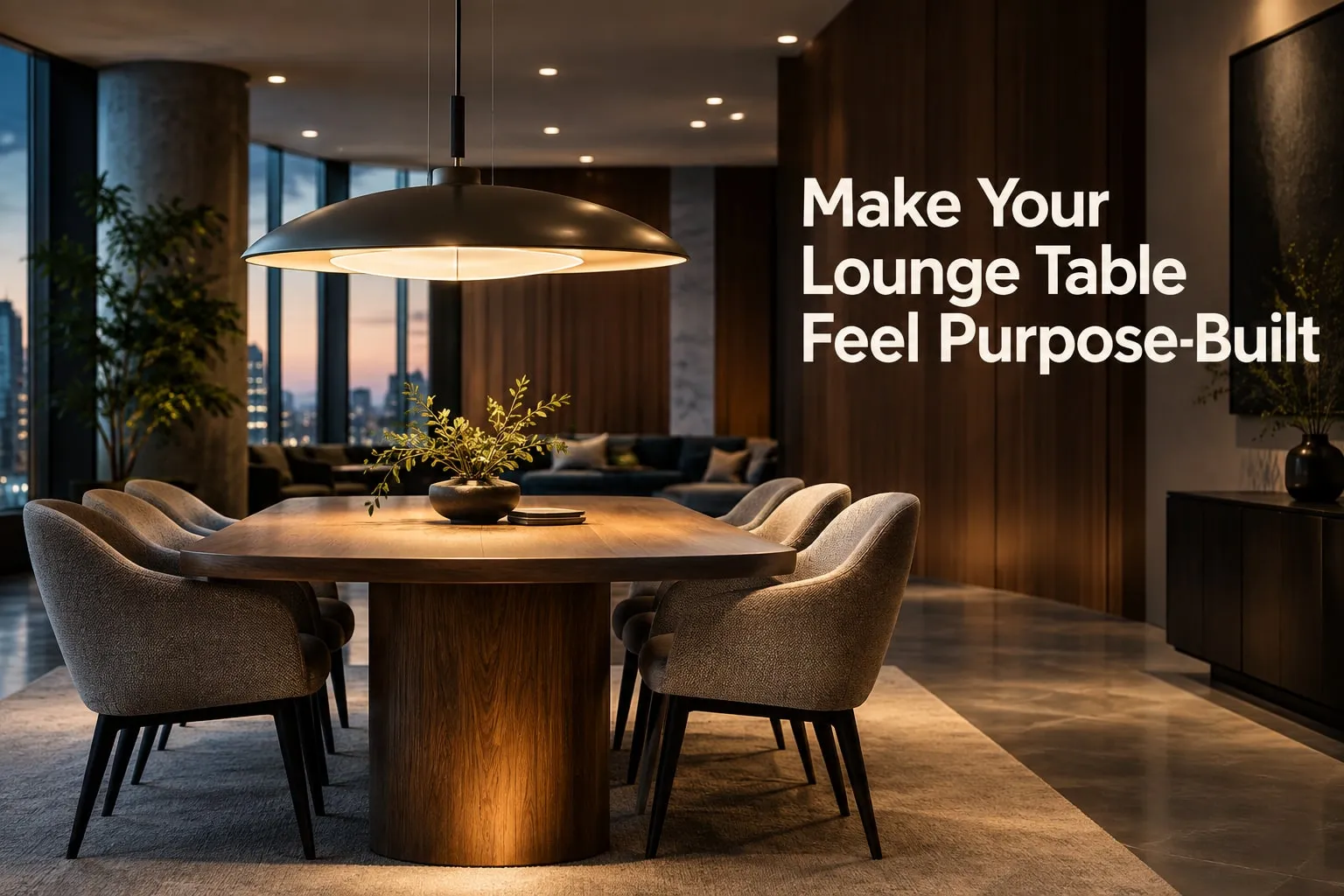
A pendant centred over the table, or a focused downlight aimed at its surface, creates a legible visual task zone. The surrounding circulation and work areas can stay at suitable levels, while a brighter or warmer pool signals gathering. This is visual hierarchy, not simply higher wattage.
Dining lights for commercial interiors do not replace desk lighting. Reading, writing and data processing may call for about 500 lux under EN 12464-1, while dining and hospitality areas use lower maintained illuminance.
Use separate circuits or dimming scenes so the table remains defined without running every ceiling luminaire at full output, especially in daylight-filled Delhi lounges.
Emergency lighting, exit signs and escape-route illumination are separate life-safety provisions. Decorative fittings cannot replace them; coordinate switching and dimming so a dining scene never compromises required escape lighting.
How Dedicated Light Divides an Office Lounge
Place the brightest or warmest light over the dining table, not across the entire lounge. This visual hierarchy signals where people gather, while a lower background level stops the room from feeling like a continuously lit workstation.
For office lounge dining lighting, divide the space into four legible zones:
- Dining: Centre a pendant or focused downlight over the table in an office cafeteria, executive dining room or workplace café.
- Circulation: Keep paths evenly visible, with no dark patches between tables, entrances and service points.
- Work: Maintain a separate, stronger task-lighting scene for laptops, writing and informal meetings in breakout areas or co-working lounges.
- Relaxation: Use softer background light around sofas, waiting seats and hotel-style reception lounges.
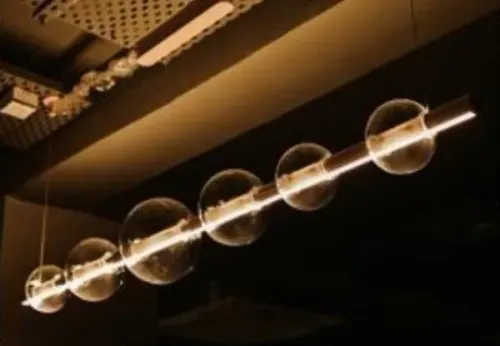
Centre the fitting over the dining surface, not over the nearest ceiling tile. A linear fitting or several smaller pendants suit a long table better than one small central lamp, provided spacing matches the table and the manufacturer’s photometric file.
Separate scenes for meals, informal meetings, waiting and employee socialising prevent every luminaire from running at full output. In a Delhi lounge, daylight-linked controls can preserve the table’s visual focus as sunlight changes. Contrast matters more than wattage: a brighter fitting without a darker background adds glare and clutter.
Visible differences between adjacent white light sources can also make the layout look accidental, so keep neighbouring zones visually compatible. One of the practical dining lighting benefits in Delhi is a lounge that feels intentional without over-lighting every activity.
How to Set Light Levels, Colour Temperature and CRI
For dining lights for offices and lounges in Delhi, set the table as a separate visual task zone rather than copying the office ceiling grid. Use softer illumination for socialising and waiting; increase the table level when people must read menus, eat neatly, write, or hold a meeting.
There is no single lux value that suits every table.
Use colour temperature according to the room’s purpose:
| Use | Colour temperature | Effect |
|---|---|---|
| Social dining and relaxation | 2700–3000 K | Warmer, calmer atmosphere; flattering skin and food tones |
| Mixed dining and informal meetings | 3000–3500 K | Welcoming light with better alertness and compatibility with office areas |
| Dining beside workstations or presentations | 3500–4000 K | More neutral appearance; supports attention and presentation clarity |
Do not place a 2700 K pendant beside a 4000 K ceiling panel in the same sightline. The mismatch makes the lounge look accidental and can distort presentations, finishes and brand colours.
Colour rendering matters as much as colour temperature. Poor rendering can make food dull, wood grey, artwork lifeless and skin tones unnatural. Ask the supplier for the stated CRI or Ra value; Ra 80 is a common baseline, while Ra 90-class performance deserves consideration for premium food, artwork or finish presentation.
A product photograph cannot prove either value because cameras, screens and editing alter colour. Use separate dimming or scenes so social dining stays gentle while writing and meetings receive their required task lighting.
How to Control Glare, Flicker and Delhi Maintenance Problems
A bright, exposed lamp in a seated person’s line of sight can cause discomfort even when average lux is acceptable. Use shielding, a diffuser or indirect light, then inspect the fixture from normal seated eye height at every table position.
UGR is useful for comparing office glare, but it is not a complete test for decorative dining fixtures. Its result depends on room geometry, observer position and luminaire luminance; glossy surfaces, small point sources and changing seats can still create discomfort that one room-average figure misses.
| Issue | What to check | Why it matters |
|---|---|---|
| Glare | Shielding, diffusion and seated-eye-height views | Prevents bright sources entering normal sightlines |
| Flicker | A declared flicker or temporal-light metric | Moving people, ceiling fans and phone cameras can reveal modulation |
| Dimming | Compatible LED, driver, dimmer and control protocol | Prevents flicker, audible noise, limited range or failure to switch off |
| IP rating | IEC 60529 first and second digits | The first covers solids and dust; the second covers water |
Delhi dust makes cleanability part of performance. Choose accessible, wipeable surfaces, fewer upward-facing ledges and serviceable drivers; open shades and complex dust traps progressively reduce output. These practical dining lighting benefits in Delhi make maintenance faster and preserve the intended appearance.
How to Compare Fixtures Before Approving a Commercial Installation
Approve dining lights for commercial interiors only after checking the table, optics and service plan—not the finish alone. Centre the fitting over the dining surface, not the room or nearest ceiling tile. For a long table, compare these options:
| Option | Strength | Risk to check |
|---|---|---|
| Linear fitting | Continuous, even coverage along a long table | Photometric file must confirm uniformity at the installed height |
| Several smaller pendants | Flexible spacing and visual rhythm | Gaps between pools of light can leave dark sections |
| One small pendant | Simple installation over a compact table | Underlights the ends of a long surface |
Ask the supplier for the manufacturer’s photometric file and verify its mounting height, beam spread and spacing against the actual table dimensions. Confirm the fixture is physically centred; an attractive fitting shifted toward a wall will create uneven illumination.
Before approving office lounge dining lighting, require written confirmation that the LED lamp, driver, dimmer and control protocol work as one system. Specify scene-based controls for meals, meetings and cleaning, or daylight-linked controls where strong Delhi daylight changes the room.
- Request the declared CRI or Ra value and flicker information.
- Record the exact IP rating, including both digits; IP is not a general quality label.
- Check how lenses and shades are wiped, and how the driver is reached and replaced.
- Coordinate switched or dimmed decorative circuits with emergency lighting and exit signs.
Kimika Lights can be considered alongside these checks, provided the supplier discussion covers performance, controls, maintenance and placement as carefully as appearance.
Related products
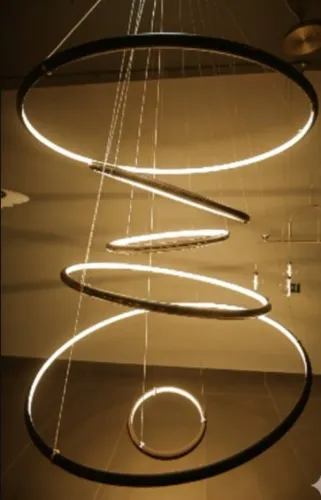
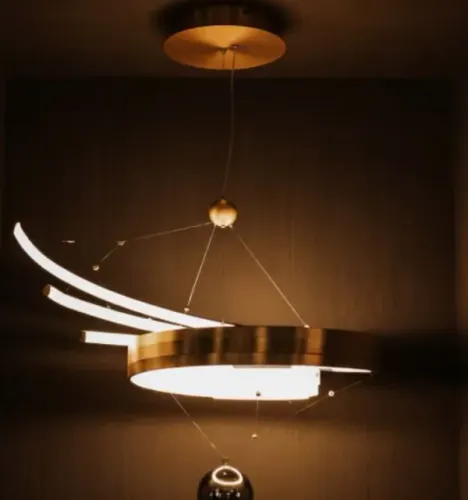
 | Dining Lights – I – Crafted for Elegant Dining Ambience Dining Lights – I – Crafted for Elegant Dining Ambience Dining Lights – I from Kimika Lights brings warmth, charm, and sophistication to your dining space. View product → |
 | Dining Lights – II – Modern Warmth for Inspired Dining Dining Lights – II – Modern Warmth for Inspired Dining Dining Lights – II by Kimika Lights blends contemporary design with soft, ambient illumination to create the perfect dining experience. View product → |
Frequently asked questions
Why does general office lighting fail at dining tables?
Office ceiling grids provide uniform ambient light for workstations, but they do not create a visual focus for faces, food and conversation at a dining table.
How does dedicated dining lighting divide an office lounge?
A focused fixture marks the dining zone, separates it from seating and circulation areas, and gives the lounge a clearer layout without adding walls.
What should you check when setting dining light levels, colour temperature and CRI?
Set comfortable illumination for eating and conversation, choose a suitable warm-to-neutral colour temperature, and select a high CRI so food and skin tones appear natural.
How can you compare fixtures before a commercial installation?
Compare glare control, flicker performance, dimming compatibility, mounting access, cleaning effort, replacement parts and ongoing maintenance requirements.
Related products
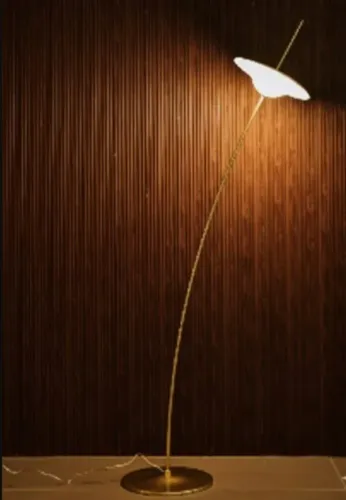
 | Dining Lights – III – Sophisticated Illumination for Modern Dining Dining Lights – III – Sophisticated Illumination for Modern Dining Dining Lights – III from Kimika Lights offers a perfect balance of style, warmth, and contemporary elegance. View product → |
 | Dining Lights – IV – A Touch of Minimal Luxury Dining Lights – IV – A Touch of Minimal Luxury Dining Lights – IV by Kimika Lights embodies refined simplicity with its clean lines, soft illumination, and contemporary elegance. View product → |
 | Dinning Lights Kimika Lights brings refined simplicity and warm illumination to any interior. View product → |
 | Pendants – III – Artistic Lighting with Modern Sophistication Pendants – III – Artistic Lighting with Modern Sophistication Pendants – III by Kimika Lights features a contemporary silhouette crafted to enhance both residential and commercial interiors. View product → |
Keywords