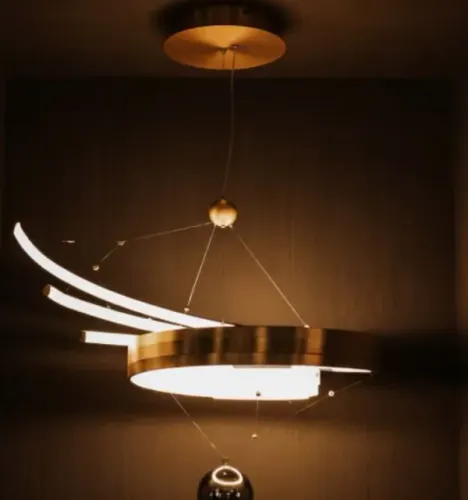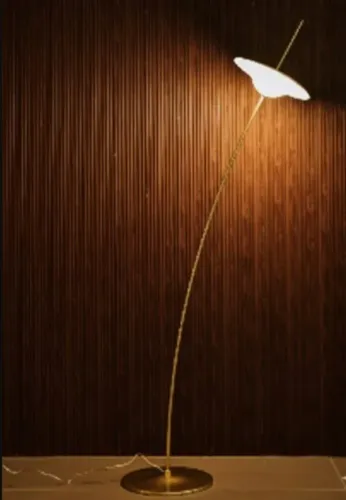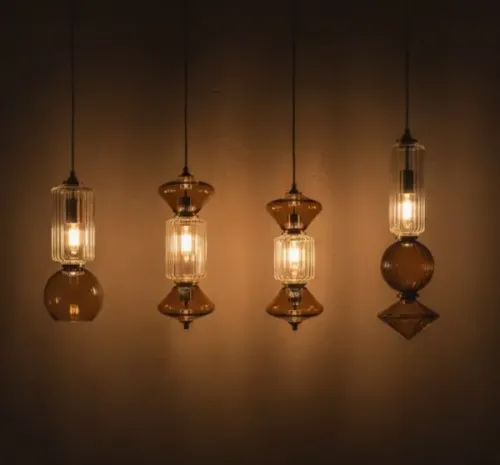
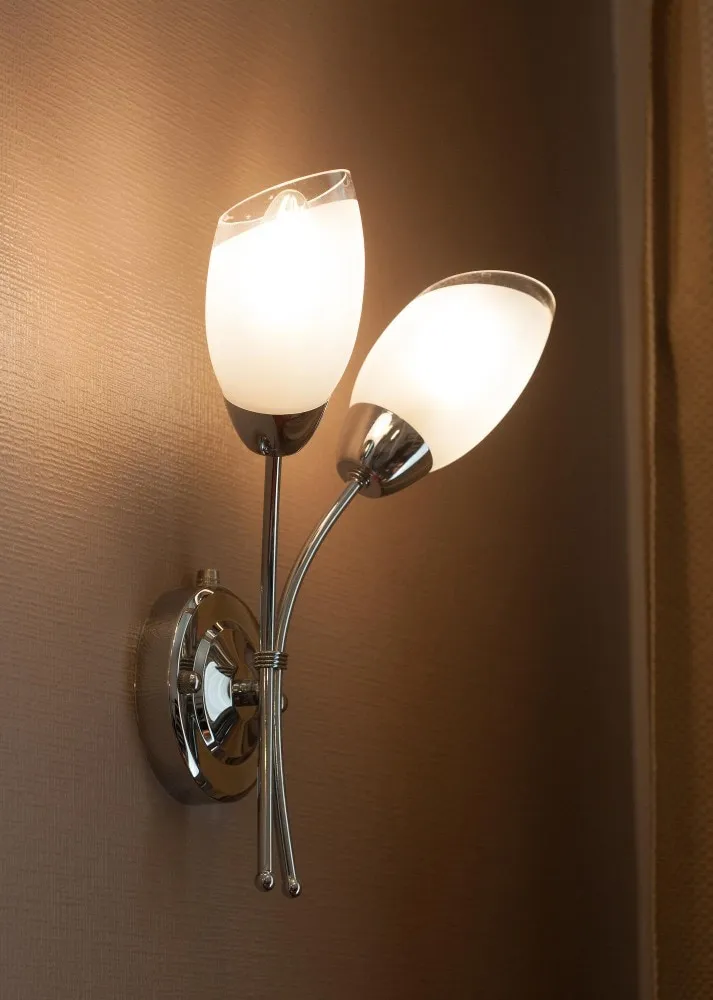
The right choice depends on what the fitting must illuminate, how much ceiling and circulation space you have, and where wiring can actually be installed. By the end, you will be able to choose by room, set safe mounting positions, and compare lighting specifications instead of relying on appearance alone.
Key takeaways
- Choose wall lights for low ceilings, narrow rooms and busy walkways.
- Use pendants where ceiling height and furniture placement provide clear clearance.
- Check lumens, colour temperature, beam spread and glare before comparing designs.
- Confirm switch points, wiring routes and ceiling support before ordering a fitting.
How Wall Lights and Minimal Pendants Change a Room
Choosing wall lights or minimal pendants for modern interiors in Delhi starts with the room’s geometry, not the fitting’s appearance. Low ceilings, narrow rooms and busy walkways usually benefit from wall lights; a pendant can make these spaces feel lower and harder to navigate.
A taller room or a large, open plan can absorb a suspended focal point.
| Fixture | Effect on proportions | Effect on circulation | Best suited to |
|---|---|---|---|
| Wall light | Keeps the ceiling visually open and adds vertical emphasis without shortening the room | Leaves head height and walking routes clear | Low ceilings, narrow rooms, bedside positions, artwork and layered accent lighting |
| Minimal pendant | Draws the eye downward and defines a zone beneath it | Works safely only where people will not pass beneath it | Dining tables, kitchen islands, double-height spaces and rooms needing a central focal point |
For wall lights for modern interiors in Delhi, place the fitting where its light supports the room rather than expecting it to do every job. Build three layers: ambient light for general visibility, task light for reading, cooking or mirror use, and accent light for artwork or texture.
A wall light can provide ambient or accent light, but it rarely replaces task lighting at a desk or counter.
Use 2700–3000 K for a warm residential feel; choose approximately 3500–4000 K where focused work matters. Keep fittings in the same sightline close in colour temperature, or a warm sconce beside a cool ceiling fitting will look accidental.
In a compact apartment, wall lights usually preserve valuable floor and ceiling space; in a spacious room, one restrained pendant can establish proportion and purpose.
The Better Choice by Room and Use
Choose wall lights for low ceilings, narrow rooms, bedside use and clear walkways; choose pendants when a surface needs a visual centre.
| Room | Better choice | Why it works |
|---|---|---|
| Living room | Wall lights, with a pendant only over a defined seating or coffee area | Wall lights reduce ceiling clutter and add accent or ambient layers; a single pendant can sharpen a large room’s focal point. |
| Bedroom | Wall lights | Bedside fittings free the tables, prevent pendant glare at eye level and keep the ceiling visually calm. |
| Dining area | Minimal pendant | It marks the table as a zone; leave about 76–91 cm from the tabletop to the fitting’s underside. |
| Kitchen island | Minimal pendant | Upward-open or translucent shades put more useful light on the work surface than dark, enclosed shades. |
| Hallway | Wall lights | They preserve head clearance and circulation space, while grazing walls can make a narrow passage feel wider. |
| Balcony | Wall lights | Select an outdoor-rated fitting with an appropriate IP rating; wind and rain make lightweight hanging fixtures a poor choice. |
| Café | Pendants over tables, wall lights along circulation or feature walls | Pendants define seating groups; wall lights keep routes clear and support atmosphere. |
| Compact apartment | Wall lights | They occupy less visual and physical space, helping low ceilings and multipurpose rooms feel less crowded. |
Minimal pendants in Delhi work best when the ceiling can carry their weight and the fitting does not obstruct movement. Pendant lighting for homes in Delhi should be compared by lumens, not watts, then combined with separate task and accent light rather than forced to illuminate everything.
Placement, Wiring and Installation in Delhi Homes
Mark the finished floor, furniture and walking line before drilling. Mount a wall-light centre around 150–170 cm above the floor, then adjust it to the user’s eye level and the fitting’s beam; an exposed bulb at eye height creates glare even when the position looks balanced.
| Option | Installation priority | Common failure |
|---|---|---|
| Wall light | Keep the beam out of direct eye line; leave door, curtain and artwork clearance | Glare, blocked switches or a fitting struck by furniture |
| Minimal pendant | Keep its lowest point at least 2.1 m above circulation areas; above a table or island, allow roughly 75–90 cm from surface to fitting | Head strikes, obstructed sightlines or a crowded ceiling |
For wall lights for modern interiors in Delhi, run the cable route and switch position before plaster, paint or wardrobes are fixed. Keep ambient, task and accent circuits separate: a sconce rarely replaces focused light at a desk, counter or mirror.
Use this installation check before ordering minimal pendants in Delhi:
- Confirm the slab, beam or framing can carry the fitting; do not hang heavy glass, stone or metal from gypsum alone.
- Match the bracket, threaded rod or independent support to the fitting’s stated weight.
- Verify 230 V, 50 Hz compatibility, lamp base and driver; a plug adapter cannot correct voltage incompatibility.
- Pair the LED driver, dimmer and control method, or expect flicker, buzzing or failed low-level switching.
- Choose 2700–3000 K for warm rooms, and keep adjacent fittings near the same colour temperature.
How to Compare Light Performance, Not Just Appearance
A 1,500-lumen fitting will not automatically light a 15-square-metre room well. Shade opacity, beam spread and mounting height determine how much light reaches the working surface. Compare lumens, not watts: watts measure electrical input, while lumens measure visible output.
Estimate required lumens as target illuminance in lux × floor area in square metres, then allow for losses.
| Figure | Wall light | Minimal pendant |
|---|---|---|
| Lumens and distribution | Suits ambient or accent coverage; check up-light, downlight or asymmetric beam | Suits focused light over a table or island; check beam spread and shade loss |
| Colour temperature | 2700–3000 K gives a warm residential appearance | 2700–3000 K suits dining and living; 3500–4000 K looks whiter for focused work |
| CRI | Choose CRI 90 or higher for artwork, food and skin tones | Use the same standard where colour accuracy matters |
| Dimming | Confirm the driver and wall control work together | Confirm compatibility with the pendant’s driver or lamp |
| IP rating | Check it for balconies or damp locations | Check it where moisture or cleaning spray can reach the fitting |
Ambient lighting needs broad, even distribution. Task lighting needs sufficient lux at a desk, mirror, counter or table; a wall light rarely replaces a properly aimed task fitting. Accent lighting needs a controlled beam, often aimed at artwork or textured walls.
For pendant lighting for homes in Delhi, record rated life, dimensions, weight and driver location before ordering. Dimming an LED is not guaranteed: incompatibility causes flicker, buzzing or a narrow usable range. With decorative lights for interiors in Delhi, also check dust-prone ledges, removable shades and whether an integrated LED driver can be replaced.
A Purchase Checklist for the Final Decision
Do not place the order until the supplier and electrician have confirmed the fitting will work with Delhi’s 230 V, 50 Hz supply and your intended circuit.
1. Ask the supplier for a written specification showing lumen output, colour temperature, CRI, beam distribution, rated life, dimensions, weight, IP rating, lamp base and driver location. A product photograph and wattage are not enough to compare wall lights or minimal pendants for modern interiors in Delhi.
2. Confirm whether the fitting uses a replaceable lamp, integrated LED module or external driver. For integrated LED, ask whether the driver can be replaced separately; otherwise a failed driver can make you discard the complete fitting. Check how the shade opens for cleaning, since upward-facing ledges collect Delhi dust.
3. Give the electrician the fitting’s weight, mounting plate dimensions and ceiling or wall material. Confirm anchor type, junction-box position, cable length, earthing and whether existing wiring needs alteration. A plug adapter changes shape, not voltage, and hard-wired installation needs a qualified electrician.
4. Confirm dimmer compatibility by naming the exact LED driver, dimmer and control method. Test for flicker, buzzing, a narrow dimming range and failure to switch off at low settings before final installation.
5. Match 2700–3000 K with warm residential lighting or 3500–4000 K for focused work, and plan separate ambient, task and accent layers. Ask Kimika Lights for the same technical details before comparing its decorative lights for interiors in Delhi with another supplier’s fitting.
Related products
 | Pendants – I – Minimal Elegance with Modern Glow Pendants – I – Minimal Elegance with Modern Glow Pendants – I from Kimika Lights brings refined simplicity and warm illumination to any interior. View product → |
 | Pendants – III – Artistic Lighting with Modern Sophistication Pendants – III – Artistic Lighting with Modern Sophistication Pendants – III by Kimika Lights features a contemporary silhouette crafted to enhance both residential and commercial interiors. View product → |
Frequently asked questions
Are wall lights or minimal pendants better for modern interiors in Delhi?
Wall lights suit low ceilings, narrow rooms and busy walkways, while minimal pendants work better where ceiling height and clear furniture zones allow them.
Which rooms are best suited to wall lights or minimal pendants?
Use wall lights beside beds, sofas, mirrors and corridors; use pendants over dining tables, kitchen islands and other clearly defined surfaces.
What should you check before installing lighting in a Delhi home?
Check mounting surfaces, switch locations, wiring routes, ceiling support, fixture clearance and whether an electrician can access the connection safely.
How do you compare light performance beyond appearance?
Compare lumens, colour temperature in Kelvin, colour-rendering index, beam spread, dimming compatibility and glare control.
Related products
 | Pendants – II – Contemporary Design with Artistic Elegance Pendants – II – Contemporary Design with Artistic Elegance Pendants – II from Kimika Lights offers a refined blend of modern style and functional illumination. View product → |
 | Dining Lights – IV – A Touch of Minimal Luxury Dining Lights – IV – A Touch of Minimal Luxury Dining Lights – IV by Kimika Lights embodies refined simplicity with its clean lines, soft illumination, and contemporary elegance. View product → |
 | Pendants – IV – Elegant Illumination with Sculptural Appeal Pendants – IV – Elegant Illumination with Sculptural Appeal Pendants – IV from Kimika Lights brings a blend of refined artistry and modern elegance to any interior. View product → |
 | Pendants Pendants Kimika Lights brings refined simplicity and warm illumination to any interior. |
Keywords