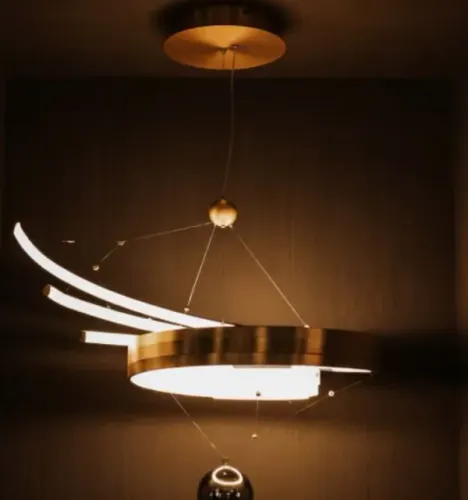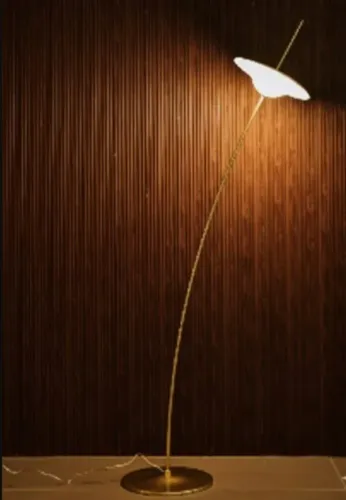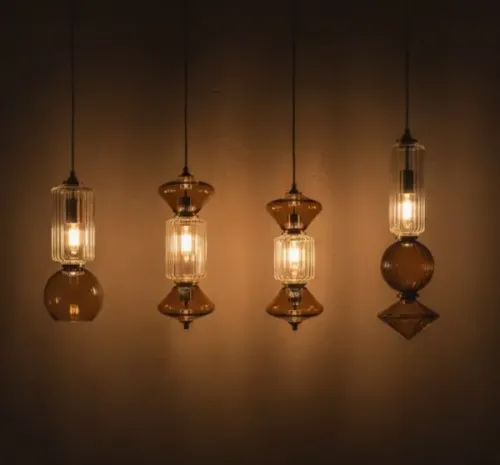
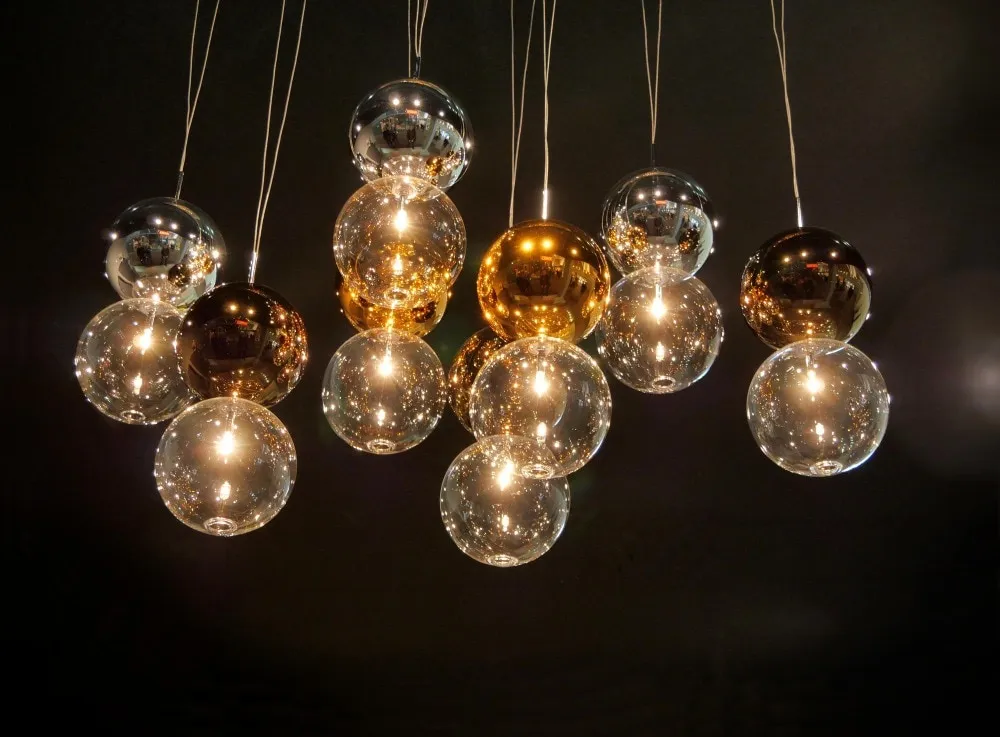
A café needs more than one attractive fixture: customers must read menus, see food accurately, pay without glare, and move safely while the room still feels warm. Use the guide below to match each zone with the right fixture, compare performance specifications, calculate quantities, and check whether a fitting will physically work before you buy.
Key takeaways
- Match decorative fixtures to zones instead of using one light type everywhere.
- Compare beam angle, colour temperature, lumen output and glare control before buying.
- Calculate fixture quantity, spacing and hanging height before placing an order.
- Confirm ceiling, wiring, mounting and maintenance access before installation.
Choose the Right Fixture for Each Café Zone
Match each fixture to the task: decorative impact at the entrance, focused light where orders and food are handled, and glare-free illumination along movement routes. Use fancy lights for cafes in Delhi as a style layer, not as the only source of usable light.
| Zone | Best fixture | Buying decision |
|---|---|---|
| Entrance | Wall lights or a compact pendant | Place light on the sign, doorway, or host point without shining into arriving customers’ eyes. |
| Counter | Pendant lights or a linear pendant | Aim even light across the menu, payment area, and pickup shelf; avoid deep shades that leave the worktop dark. |
| Two-person tables | Small pendants | Hang one fixture per table grouping, with a diffuser to prevent reflections on plates, phones, and glossy tables. |
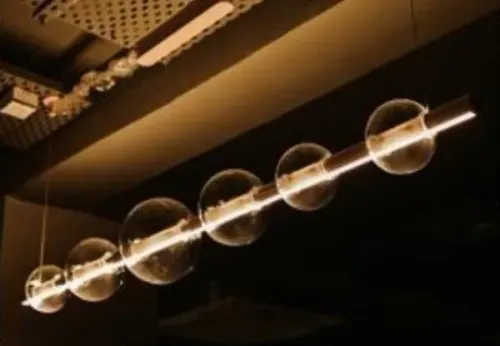
| Communal tables | Long linear pendant or multiple aligned pendants | Match the fixture length to the table so the centre is not bright while the ends fall into shadow. |
| Bar | Low pendants or adjustable track lights | Light bottles, preparation surfaces, and faces separately; keep fittings out of staff movement paths. |
| Washroom | Wall-mounted vanity lights with a sealed ceiling fitting | Put light beside the mirror for even faces, and choose an IP44-rated fitting where splashes reach it. |
| Circulation paths | Recessed downlights or wall washers | Space them to mark turns and steps, not directly above every head; excessive brightness creates harsh contrast. |
Check door swings, exhaust fans, sprinkler heads, and sightlines before ordering. A dramatic fitting that blocks the menu or catches a customer’s head is the wrong choice.
Pendant, Chandelier, Track, Wall, Recessed or Linear: What Actually Works?
For most cafés, pendants provide the best balance of character, focused light, and manageable installation. The other five types solve different problems and become poor choices when their limits are ignored.
| Type | Best use | When it becomes impractical |
|---|---|---|
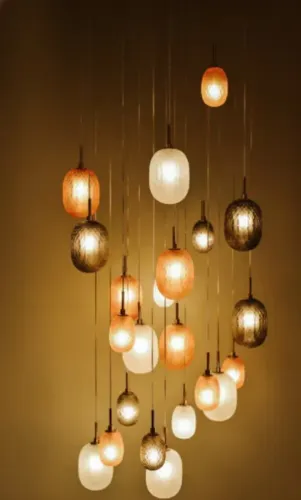
| Pendant | Two-person tables, counters, and bars; creates a defined pool of light | Low ceilings, crowded routes, or too many fittings blocking sightlines |
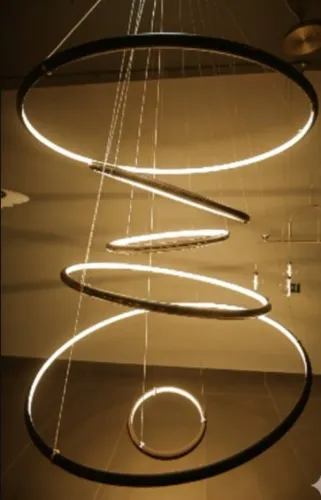
| Chandelier | Entrance, feature table, or high-ceiling dining area | Small rooms, low ceilings, heavy cleaning, or when it must provide all general light |
| Track | Flexible accent lighting for walls, displays, and changing layouts | Long exposed tracks look untidy, and poorly aimed heads cause glare |
| Wall light | Corridors, washrooms, seating edges, and soft background light | It cannot replace table illumination; protruding fittings obstruct narrow paths |
| Recessed downlight | Clean ambient coverage where the ceiling can be opened | It loses decorative impact and performs badly when spacing, beam angle, or glare control is wrong |
| Linear fixture | Counters, communal tables, shelves, and long bar fronts | Short or irregular spaces create wasted light and awkward joins |
If you are comparing fancy pendant lights in delhi, check whether the fitting is decorative or genuinely useful: a low-lumen pendant still needs recessed or track lighting around it. Choose a chandelier only when its scale suits the ceiling; an oversized one makes a compact café feel crowded.
Use wall lights for atmosphere, not task work, and avoid recessed fittings where concrete slabs prevent clean wiring access.
The Specifications to Compare Before You Buy
Compare delivered light, not wattage: lumens tell you how much light leaves the fixture, while watts only show electricity use. Ask for a photometric file or lux estimate; decorative fittings alone rarely provide enough task light. Use roughly 200–300 lux at seating, 300–500 lux at a counter, and 100–200 lux along circulation paths.
| Specification | Figure to compare | Why it matters |
|---|---|---|
| Lumens and efficacy | Delivered lumens; lumens per watt | Reveals useful output and energy demand |
| Colour temperature | 2700–3000 K | Keeps food and interiors warm without looking yellow |
| Colour rendering | CRI 90 or higher; R9 value above 50 | Shows skin, coffee and food colours accurately |
| Beam angle | 24–40° for accents; 60° or wider for general coverage | A narrow beam creates bright spots and dark gaps |
| Glare control | Diffuser, baffle or shield; UGR below 19 for work areas | Prevents eye strain and reflections on glossy tables |
| Dimming | Phase-cut, 0–10 V or DALI compatibility | Prevents buying a fixture your control system cannot dim |
| Driver and life | Flicker-controlled driver; replaceable driver; L70 rating of 50,000 hours | Simplifies repairs and predicts LED brightness decline |
| Ingress protection | IP44 where splashes are possible; higher only when exposure demands it | Keeps moisture from reaching electrical parts |
Before ordering, confirm the lamp, driver and dimmer are compatible together. A cafe lighting store in Delhi should also provide access dimensions, cleaning instructions and replacement-driver details; sealed decorative fittings become expensive when maintenance requires removing the entire ceiling fixture.
Calculate Quantity, Spacing and Safe Hanging Height
Start with the clearances, then calculate quantity: a pendant over a table belongs 750–900 mm above the tabletop, while one over a counter needs the same 750–900 mm above the work surface. Keep the fixture bottom at least 2.1 m above the finished floor wherever customers walk.
- For a two-person table, centre one compact pendant over the table’s midpoint. Keep its diameter below one-third of the table width so diners can see one another.
- For a communal table, divide its usable length by a target spacing of 1.2–1.5 m, then round up to the next whole pendant. Place the first and last fittings half a spacing from each end.
- For a counter, measure its length, subtract the end clearances, and divide the remainder by 1.2–1.5 m. Use the resulting quantity, then adjust positions to equal spacing.
- For ceilings below 2.7 m, choose shallow pendants or shorten the drop. A long decorative cluster will enter sightlines and invite head strikes.
- Check seated sightlines from every table before fixing the positions. A pendant that sits directly between customers and the barista becomes visual clutter, even when its height is technically safe.
Keep pendants away from doors, queue turns and aisle centre lines. If you plan to buy fancy lights for cafe in delhi, mark the ceiling with tape first and walk the space at standing and seated eye level. That quick test exposes blocked views before installation.
Plan the Layered Scheme and Confirm the Installation Fit
Use four layers, not one oversized chandelier: ambient light makes the café navigable, task light supports ordering and food preparation, accent light draws attention to shelves or artwork, and decorative fixtures establish identity.
1. Set the baseline. Aim for roughly 100–200 lux in circulation areas, 200–300 lux over tables, and 300–500 lux at the counter or preparation surface. Put ambient downlights or linear fixtures on one circuit, task lighting on another, and decorative pendants or wall lights on a dimmable circuit.
2. Control glare before ordering. Choose frosted diffusers, deep shades, or honeycomb louvres instead of exposed LED points. Keep beams away from customers’ eye level and avoid aiming lights at glossy tabletops, mirrors, glass fronts, or polished floors; view a full-size sample from a seated position.
3. Confirm physical clearances on the plan. Keep the lowest fixture at least 2.1 metres above walkways, leave doors and cabinet doors free to swing, and check that pendant drops do not block staff sightlines. Mark the canopy, shade diameter, table edge, and sprinkler positions.
4. Verify the electrical fit. Ask for fixture weight, mounting method, ceiling-anchor capacity, total wattage, LED driver location, earthing requirement, cable length, and 230-volt compatibility. Confirm that the existing circuit and junction box carry the load without extension-joint clutter.
5. Match controls before you buy fancy lights for cafe in delhi. Check whether each driver supports phase dimming, DALI, or 0–10 V control, then separate dining, counter, accent, and closing scenes. Kimika Lights can help you check a decorative dining fixture against those installation details before you order fancy lights for cafes in delhi.
Related products
 | Dining Lights – I – Crafted for Elegant Dining Ambience Dining Lights – I – Crafted for Elegant Dining Ambience Dining Lights – I from Kimika Lights brings warmth, charm, and sophistication to your dining space. View product → |
 | Dining Lights – IV – A Touch of Minimal Luxury Dining Lights – IV – A Touch of Minimal Luxury Dining Lights – IV by Kimika Lights embodies refined simplicity with its clean lines, soft illumination, and contemporary elegance. View product → |
Frequently asked questions
Which light fixture suits each café zone?
Use decorative fixtures for entrances and focal areas, focused lighting at counters and food-handling zones, and glare-controlled light along circulation routes.
How do pendant, chandelier, track, wall, recessed and linear lights differ?
Pendant and chandelier lights create visual impact, track lights provide adjustable emphasis, wall lights add side illumination, recessed lights keep ceilings visually quiet, and linear lights suit counters or long surfaces.
Which specifications should you compare before buying café lights?
Compare lumen output, beam angle, colour temperature, colour rendering, glare control, dimensions, mounting method, dimming compatibility and maintenance access.
How do you plan café light quantity, spacing and hanging height?
Measure each zone, identify its task and coverage, then calculate fixture count and spacing from the light distribution rather than placing fixtures by appearance alone.
What should you confirm before installing decorative café lighting?
Check ceiling construction, available wiring, mounting hardware, circuit loads, switch or dimmer compatibility, clearances and access for cleaning or lamp replacement.
Related products
 | Dining Lights – III – Sophisticated Illumination for Modern Dining Dining Lights – III – Sophisticated Illumination for Modern Dining Dining Lights – III from Kimika Lights offers a perfect balance of style, warmth, and contemporary elegance. View product → |
 | Dining Lights – II – Modern Warmth for Inspired Dining Dining Lights – II – Modern Warmth for Inspired Dining Dining Lights – II by Kimika Lights blends contemporary design with soft, ambient illumination to create the perfect dining experience. View product → |
 | Dinning Lights Kimika Lights brings refined simplicity and warm illumination to any interior. View product → |
 | Pendants – III – Artistic Lighting with Modern Sophistication Pendants – III – Artistic Lighting with Modern Sophistication Pendants – III by Kimika Lights features a contemporary silhouette crafted to enhance both residential and commercial interiors. View product → |
Keywords